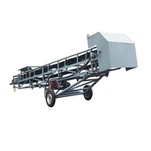


Why Reactive Maintenance is Costing You Money
Many operators operate on a "run it until it breaks" mentality. In our 15 years of experience servicing mining and industrial plants, we've seen that a $50 idler roller failure-if ignored-can rip a $5,000 rubber belt in half.
Preventive maintenance isn't just about "cleaning"; it's about listening to your machine. This checklist is designed to help your team catch small issues before they become production disasters.
1. The "Walk-Around" Inspection (Daily)
Assign this to your shift operator. It takes 5 minutes.
- Listen for the "Squeal": If you hear a high-pitched grinding noise, it usually means an idler bearing has seized. Mark it and replace it immediately. A seized roller acts like a knife against the moving belt.
- Check Belt Tracking: Is the belt running in the center? If it's rubbing against the frame structure, don't just watch it. Adjust the self-aligning idlers or check if the tail pulley has material buildup.
- Inspect Skirt Boards: Look at the loading point. If material is spilling out the sides, your skirt rubber is likely worn out. Spillage creates a safety hazard and damages the return belt.
2. Technical Maintenance (Weekly / Monthly)
Assign this to your maintenance technician.
- Lubrication (Don't Overdo It): Grease the bearings on the Head and Tail pulleys.
- Pro Tip: Most modern trough idlers are "sealed for life" and do not need greasing. If you see a grease nipple, pump it; if not, leave it alone.
- Tension Check: A loose belt causes slippage on the drive pulley, which generates heat and burns the belt cover. Check the screw take-up or gravity counterweight. The belt should be tight enough to not sag excessively between rollers, but not guitar-string tight.
- Cleaner (Scraper) Adjustment: Check the primary and secondary belt cleaners. As the urethane blade wears down, it loses contact with the belt. Adjust the spring tensioner to ensure it scrapes off the mud/carryback effectively.
3. Troubleshooting Common Issues
Scenario A: The Belt Slips on the Drive Pulley
- Cause: Insufficient tension or wet conditions.
- Fix: Tighten the take-up device. If it still slips, consider installing Diamond Rubber Lagging on the drive pulley to increase friction/grip.
Scenario B: The Belt Runs to One Side
- Cause: Uneven loading or idler misalignment.
- Fix: First, ensure the material is loading in the dead center of the belt. If the belt still drifts, adjust the idler sets in the direction of travel. (Kick the side of the idler forward that you want the belt to move away from).

Need Spare Parts?
A maintenance plan is useless if you don't have the parts. We keep a stock of essential components compatible with TD75/DTII and international standards:
- Conveyor Belts (EP/NN/Steel Cord)
- Idler Rollers (Trough/Flat/Impact)
- Motorized Pulleys
👉 [Click Here to Get a Spare Parts Quote]