


Unloading Trolley
Heavy-Duty Unloading Trolleys: Flexible Multi-Point Discharge Systems
The Unloading Trolley (also known as a Belt Tripper) is a high-efficiency mobile discharge solution designed for large-scale bulk handling. It allows you to intercept material from a moving conveyor belt and discharge it at any required position along the line, making it the perfect choice for filling long storage bunkers, silos, or stacking materials in port terminals.
At Kunwei Machine, our unloading trolleys are engineered for seamless integration with existing trough belt conveyors. Whether you need a simple manual tripper or a fully automated, PLC-controlled distribution system, our solutions ensure precise material placement, reduced dust emission, and maximum warehouse capacity utilization.
Core Benefits:
- Versatile Distribution: Achieve continuous or fixed-point unloading across the entire conveyor length.
- High Load Capacity: Built with reinforced frames to handle high-speed belts and heavy abrasive materials.
- Custom Chute Designs: Available in single-side, double-side, or bifurcated (Y-shape) discharge options.
- Easy Integration: Designed to run on standard heavy-duty rails with minimal modification to your current conveyor structure.
What is Unloading Trolley
The Unloading Trolley moves in both directions to make a long pile on one or both sides of the belt conveyor. Depending on the height of the pillars, tripper conveyors are capable of large quantity stockpiles. You can use it to handle sand, gravel, aggregate, iron ore, copper ore, bauxite, coal, grains, etc.
Why choose us?
Custom Engineering Services
Kunwei Machine doesn't just sell equipment; we provide tailored engineering solutions. Based on your material density, lump size, and moisture content, our engineers calculate the optimal belt tension and motor power to ensure energy efficiency and system longevity.
Global Project Experience
With decades of experience in the bulk material handling industry, Kunwei has successfully delivered belt conveyor systems to mining and construction projects in Southeast Asia, Africa, and South America. We offer full technical support, from initial design drawings to overseas installation guidance.
Complete Product Qualifications
Our products all have passed test of ISO90001. All of our products comply with international quality standards and are greatly appreciated in a variety of different markets throughout the world.
Competitive Price
You can get our catalog online or visit our factory to see our products. We also provide competitive price and excellent customer service for all our customers.
-
 Tripper Car ConveyorThe tripper Car Conveyor is a separate component of the belt conveyor, which is mainly used in the occasions where the belt conveyor has unloading requirements.Add to Inquiry
 -
 Travelling Belt TripperTravelling belt tripper is a kind of unloading device, which can unload at any point in the horizontal section of the conveyor, which is convenient for the overall distribution.Add to Inquiry


- Mob: +86-18336080841
- info@jinruimachine.com
- conveyor@jinruimachine.com
- vibratingscreen@jinruimachine.com
- Add: The West of Wuyang Road, Weibin District, Xinxiang City, Henan Province, China
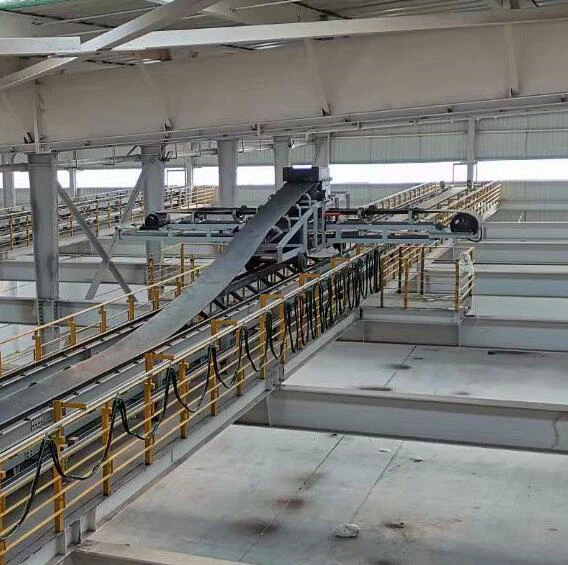
Advantages and Features Nloading Trolley
Several powered drive options and chute configurations are available.
Heavy duty structural frames and supports to provide system rigidity.
Heavy duty inlet skirting to eliminate spillage at discharge transition.
Abrasion resistant belting to reduce wear and increase life span.
How a Tripper Car Conveyor Works
A tripper conveyor is a form of conveyor belt used in construction, mining, and other large-scale earth-moving businesses. They are also known as tiered or stepped conveyers, and the term "tripper" is a colloquialism that formed after they came into widespread use. This particular type of conveyor was designed to ferry debris, earth, rocks, etc, uphill. In order to keep these materials from sliding back down the conveyor, tall ridges or flaps were affixed laterally to the face of the conveyor belts. Workers watched the occasional rock or pebble come tripping back down one flap only to trip over the next and the name stuck.
Early tripper conveyors used canvas belts, but now they're made from more flexible and durable plastics. Each belt is sealed at the ends, roughly 2 feet wide by 16 long. A flap is affixed every 4 feet. Keeping the belts taut are shafts or rollers slipped through either end. They're held off the ground by a more solid metal framework. A cog is attached to the outer end of each roller, and a metal chain, much akin to that found on a bicycle, attaches them. One section of belt attaches by means of yet another cog and chain to the next for as long as needed for the tripper conveyor to serve its purpose in transporting materials.
The Benefits of Inclined Belt Conveyor
An inclined belt conveyor transports loose or heavy materials up or down a slope or incline, making product manufacturing, assembly, and transportation a breeze. Typically designed with a flatbed running across a set of pulleys or rollers, with the incline angle determining material flow direction, these systems are extremely useful in agriculture, logistics, mining, and manufacturing industries.
While the cleated belt in these conveyors enables more secure and sturdier material transportation, the incline helps businesses maximize space. With the potential to lift and convey products at 0-90 degree angle, inclined belt conveyors solve conveying angle issues which is hard to achieve by ordinary conveyors. Companies using these systems enjoy the following advantages:
Strong and Durable Systems
Inclined belt conveyors with aluminum framing ensure reliable operations and a long-life span while maintaining the benefits of expandability and modular design. The solid aluminum frames in these systems add to their durability and bear the wear and tear of transporting abrasive or heavy materials. Besides, the belts also perform well even when subject to high loads, and their temperature-resistant fabric on the top face also ensures a long life span.
Thanks to the high conductivity of aluminum material, the static electricity produced in the inclined conveyor systems can be discharged in a controlled way and hence be used to transport all kinds of electric-sensitive products. Specifically, high abrasion resistance tied with lint-free, stable belt edges and low-friction coefficient offers jolt-free and energy-efficient transfers.
Extremely Useful
Inclined belt conveyors make moving a product from one place to another easier and faster. These heavy-duty systems can continue moving jagged and heavy objects even in harsh conditions while giving you complete peace of mind knowing that your manufacturing procedure will not stop under any circumstances. Additionally, you need not worry about logistics, as placing products on conveyor systems is simpler than having someone separate and assemble them properly. You also do not require another individual to inspect, package, stage, and place the item aside for shipping.
Cost-Effective
Good quality, durable inclined belt conveyors help reduce manufacturing expenses by working fast and reducing production hours. Since all kinds of heavy products move faster down the assembly line, manufacturing units must keep lights on only for a few hours. This increases energy efficiency by approximately 15% across varied industries. Features like regenerative braking systems and variable speed also add to the energy-efficiency features of these systems. Automated inclined belt conveyors can reduce fuel
Reduce Downtime
Yet another major benefit of inclined belt conveyors is they reduce downtime. Despite having a forklift or truck, you may require manpower to load and unload vehicles and drive them to the required destination. However, that's not the case with conveyors that keep working consistently, offering constant loading and off-loading. These systems with automated inclined belts can automatically unload materials, eliminating the need for manual unloading. This further ensures no time is wasted in examining material unloads. But for continuous operations, ensure you get a top-of-the-line inclined belt conveyor that does not break down easily and does not require frequent repairs.
Safe Product Movement
Inclined belt conveyors reduce the risk of bodily injuries among workers by eliminating the need for manual labor to transport bulky and breakable items. These systems avoid collisions by moving products straight up or down a fixed slope or incline. With no chance of human error, you experience fewer spills, drops, and breaks, reducing the need to replace as many items as possible and allowing you to meet your client's requirements.
Also, companies manufacturing these systems include several safety features, like cable pull switch, tripper position switch, and misalignment switch for secure operations. They also offer training for proper equipment use that further prevents injuries and other issues on the job site.
Help You Stay Competitive
Inclined belt conveyors now have wide usage in several industries, and if you do not have one, your business may fall back into competition. These systems also help with customer service, quality control, and productivity by consistently providing the same products every time. And when clients know exactly what they are getting through your services, they start counting on you.
Efficient Material Transportation
Inclined belt conveyors feature variable speed control allowing better control of material movement up or down the incline. This can be very useful when you have items that must go through a line several times before being shipped. Just one individual to work the different controls will be enough. Additionally, there are no height restrictions with the top conveyor systems; slowing them down at any stage of production is also an option. Even if your manufacturing unit has several floors, it's not a major problem because inclined belt conveyors can easily move up and down the unit, thus avoiding cranes or elevators. Ideally, these systems can travel anywhere, anytime, and in any condition.
Efficient Space Usage
One of the major benefits of inclined belt conveyors is space usage. Regular flat conveyors take more space than inclined systems when transporting products to other levels. Hence, your manufacturing unit may require more resources than required, creating waste and using more power in the process. All this has a negative environmental impact that can be curtailed easily using an inclined belt conveyor.
Easy to Maintain and Customizable
It is very easy to maintain inclined belt conveyors because they come with super-accessible pulleys and rollers. Additionally, the strong belts in these systems are generally of good quality synthetic material or rubber that does not get damaged very easily. Also, if you require belt replacement, it's an easy process with belts for these systems available separately. So you do not spend money on buying the whole system again.
Also, inclined belt conveyors can be customized to fit the specific requirements of a certain application, like the system's capacity, the distance it must travel, and the incline angle.
Guide rail is made of metal or other material to become groove or ridge which is a device that can withstand, fix and guide mobile device or reduce their friction. Longitudinal groove or ridge on the surface of guide rail is used for guiding or fixing machine parts. Moreover, it is also known as sliding rail or linear guides, used in the occasion of linear reciprocating motion. It has a higher rated load and can assume certain torque. At the same time, high-precision linear motion can be achieved in the case of high load.
Guide rail provides a precise operation track for the conveyor tripper car. Matched with the belt conveyor, conveyor tripper car can achieve the aim of discharging materials at any points in the certain length of belt conveyor through moving back and forth on the guide rail.
In general, guide rail is installed in the head, tail and middle part of chain bucket elevator. Also, it is usually made of wear-resistant steel and its surface is quite smooth, so on the one hand it can lessen the friction between chain and guide rail and reduce components depreciation rates, on the other hand it can prevent the chain being off tracking, so as to achieve the purpose of conveying materials efficiently.
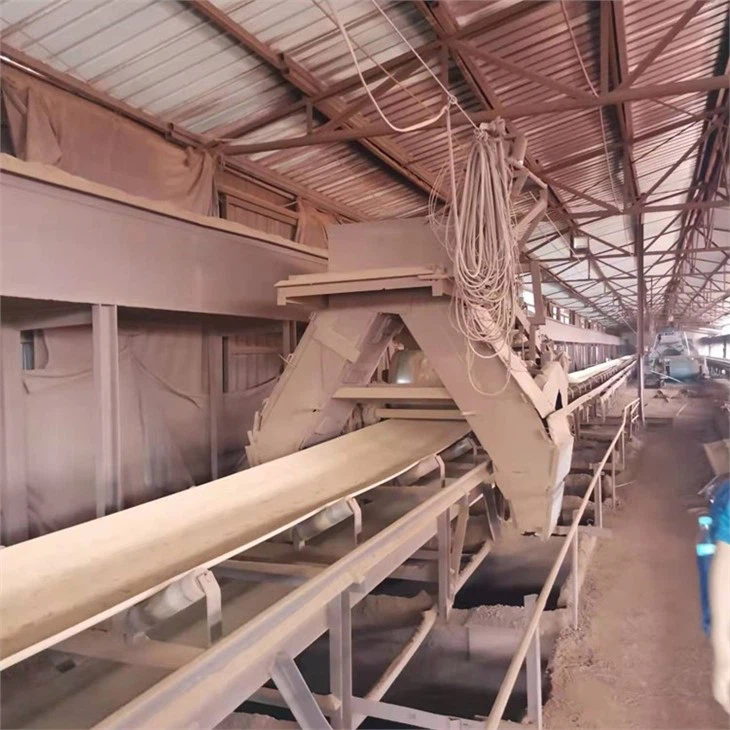
Advantages of Mobile Conveyor Belts in Mining
Mobile Conveyor Belts Are Convenient And Reduce Operating Costs
The main reason for the reduction of operating costs by mobile conveyor belts is their flexibility. They can be adapted to any change in the mining sites' requirements and allow for the flexible displacement of heavy machinery whenever needed. Furthermore, modern mobile conveyor belts will improve the seamless liaison between excavation machines and overland haulage. Also, they can reduce the need for transportation equipment on-site, thus reducing production costs even further.
Mobile Conveyor Belts Can Increase Labour Safety On Site
The flexible efficiency improvement of mining operations through mobile conveyor belts can eliminate workarounds that would need to be found with fixed systems and can thus reduce labour intensity and the danger of accidents.
Mobile Conveyor Belts Contribute To Making Mining Less Environmentally Harmful
Less transportation equipment on-site and greater efficiency lead to improved energy consumption per mined metric ton. While this is not yet optimal, it is undoubtedly more beneficial to the environment than traditional mining methods.
Mobile Conveyor Belt Solutions From Beumer
We develop tailor-made end-to-end solutions for the most efficient haulage of bulk material using the following mobile conveyor systems:
Mobile Conveyor Belt Bridges
Mobile conveyor belt bridges do precisely what their name suggests. These portable conveyor systems flexibly bridge the gap between the excavation site and the bench conveyors. Their modular design makes them indispensable on-site; they increase the miners' operating range and connect bench conveyors of different heights.
Mobile Transfer Conveyor Belts
Mobile transfer conveyor belts are the primary elements to effectively minimize operating costs in open pits. They are often compact and easily relocatable, designed as a portable conveyor belt – an advantage that perfectly responds to the ever-increasing distances between the mining machinery and the adjacent haulage system in a mining operation.
Mobile Belt Wagons
Mobile belt wagons are probably the most versatile equipment miners can use in open-pit mining. Thanks to customizable boom configurations, they can respond to almost any mining operation's demands. They can be driven around on the mining site thanks to caterpillar drives, and a state-of-the-art controlling system perfectly syncs them to any on-site haulage system.
Mobile Reclaim Conveyors
Mobile reclaim conveyors reduce the requirement for cost-intensive stacker systems. They allow miners to directly reclaim raw materials from bucket wheel reclaimers and send them on their way onto the overland conveyors. Furthermore, they can be used as a mobile emergency backup for an existing reclaiming system. Also, they eliminate the need for excavators, wheel loaders, or trucks to move material and thus significantly reduce the operating costs of open-pit systems.
Applications of Belt Trippers & Belt Plows
For applications where more than one conveyor discharge position is required, offers several approaches and options to meet the demands of the project, among them, belt trippers, belt plows/belt diverters, and reversing shuttle conveyors. Whether you need a reversing belt with discharges at both ends, filling multiple bins along the length of the conveyor, or you need to create a long continuous pile such as in filling a bulk storage building, has your bulk material handling needs covered with our tripper conveyors and plows.
A belt tripper is incorporated onto a conveyor in order to "trip" the material off the conveyor at specified locations between the terminal pulleys. A belt tripper can either be in a fixed position, or travel continuously at a constant speed for layered stacking.
A belt tripper consists of a structure with two pulley assemblies. As the belt passes over the upper pulley, the material is discharged from the belt into a collection chute. The material is then diverted to one side or both sides of the belt for discharge, or back onto the belt if the desired discharge position is at the end of the conveyor. Several powered drive options and chute configurations are available.
Can provide a belt tripper for existing conveyors, or a complete tripper conveyor.
- Features
- Four wheel drive
- Heavy-duty Construction
Custom Design: Belt trippers are designed around your unique requirements and how the material flow should be re-directed. Common options include one, two, or three way discharge chutes with diverter and/or auxillary feeders (screw feeder, reversible belt feeder, etc.).
Engineered Pulley Loop: The conveyor belting travels through a set of pulleys which create the material "trip," or discharge point and then redirects the belt back on to the idlers. This "pulley loop" is designed so the conveyor belting will experience a very limited amount of stress, eliminating the opportunity for premature wear and stretching.
Direct Drive: Belt trippers are equipped with direct mounted motor and gear reducers that are separate from the main conveyor drive components. This allows for the tripper travel to be controlled from either a remote or local location.
The Basics of Conveyor Maintenance
Conveyors are present in almost all manufacturing facilities. They often play a critical role in production and material handling processes. It is not an asset you want to see shut down, unless it's for planned conveyor maintenance.
Stay with us as we discuss the significance of routine conveyor maintenance, common conveyor belt maintenance issues, and how to build a conveyor maintenance plan. Let's dive straight in.
The Importance Of Regular Conveyor Maintenance
Warehouses and manufacturing facilities can feature various types of conveyor systems. They are a great way to automate the flow of goods and materials in an industrial facility, leading to fewer bottlenecks and a more constant process flow.
The critical nature of conveyors is undisputable. However, we often act as if the smooth functioning of conveyors is a given. We allocate maintenance attention only when there is a problem.
The main culprits for the lack of maintenance is the fact that conveyor systems are designed to operate round-the-clock and have a lot of moving parts spread over a large area. To perform any significant maintenance work, the whole conveyor system has to be stopped. Oftentimes, this means that a portion of factory operations (or all of them) have to be halted.
It is no wonder maintenance professionals are hesitant to do that on a regular basis.
Unfortunately, this delay in maintenance often causes problems down the line. Small problems compound and result in major expensive breakdowns that could have been avoided.
This is why regular conveyor maintenance should never be overlooked. You need to plan and schedule it as part of regular plant operations. It is the only way to minimize planned downtime time for maintenance activities, as well as reduce the chance for a prolonged downtime due to an unexpected breakdown.
Our Factory
The enterprise took the lead in passing the ISO90001 quality management system certification in 2005, with strong technical force, rich manufacturing experience, mature manufacturing process, complete testing methods, all of which adopt CAD, which can fully meet the user's equipment modeling and non-standard design, and has a complete pre-sale and after-sales service system. The products are of high quality and low price, and are sold well in the mainland, Hong Kong, Macao and Taiwan, and are exported to Southeast Asia, Africa, Europe, America and other places, Welcome to visit, consult and negotiate with us.

Frequently Asked Questions (FAQ)
Optimizing your conveyor system?
- Need the main conveyor for this trolley? View our Rubber Belt Conveyors for heavy-duty mainlines.
- Handling materials at a steep angle? Check our Sidewall Belt Conveyors for vertical lifting.
- Need a simpler bi-directional solution? Explore Reversible Belt Conveyors for shorter shuttle distribution.
We're professional unloading trolley manufacturers and suppliers in China, specialized in providing high quality customized service. We warmly welcome you to buy high-grade unloading trolley for sale here from our factory. Good service and low price are available.
Unloading Trolley, Tripper Car Conveyor, Travelling Belt Tripper